
Osceola 72-Hour Release Availability
No official rolling named-person 72-hour release view was found in Osceola County Corrections' public interface. The inmate search shows a current population and removes released people during the next update. The Daily Report is searchable by arrest date, but it records arrivals rather than departures. The daily statistics PDF counts release categories without naming the people. Combining any of those pages does not create a valid three-day release feed.
The absence of a web feed does not mean the records do not exist. Florida's GS2 retention schedule describes a 24-hour Commitment and Release List. A 72-hour result can be reconstructed by requesting the three consecutive daily lists that cover the desired window. This gives each day a clear boundary and avoids mixing a calendar span with a vague rolling period.
Build Osceola 72-Hour Release Records
Begin with the exact dates and time zone that define the three-day span. An inquiry made on Monday may need Friday, Saturday, and Sunday, while another inquiry may need three different calendar dates. State the dates rather than merely asking for "the last 72 hours." The custodian can then identify the matching daily lists without guessing when the period starts.
Submit the request through the Osceola Jail Record Requests page or its linked public-information portal. Routine requests are processed during normal business hours. Osceola reviews the request and then advises of applicable charges. Florida public-record law permits copy charges and, for extensive work, a reasonable special-service charge, so a narrow three-date request is more useful than a broad narrative inquiry.
- Write the three exact consecutive calendar dates in the request.
- Name each record as a GS2 Item 22 Commitment and Release List.
- Ask for all three in an electronic format and request a cost estimate when needed.
- Review for repeated bookings, transfers, and release types before counting unique people.
- Request an individual release sheet for any entry that lacks exact time or destination.
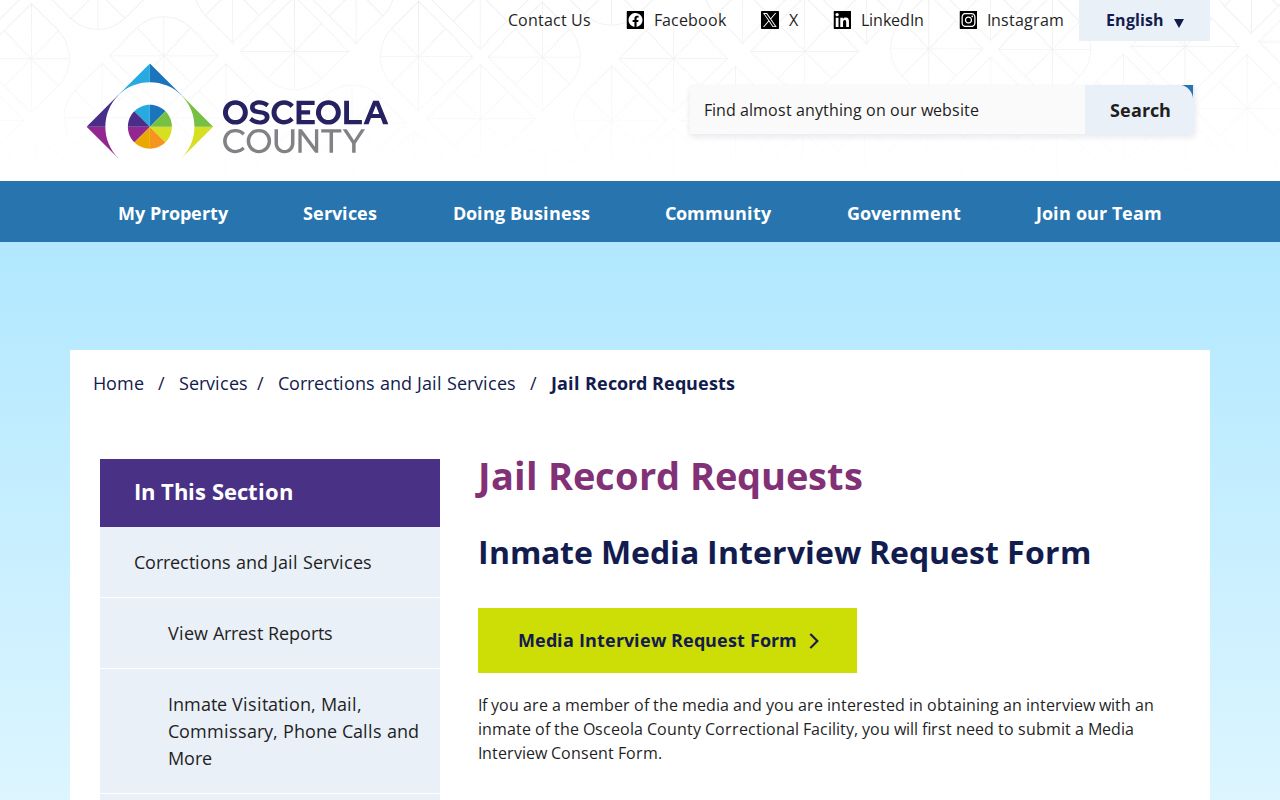
The official Jail Record Requests screen confirms where Osceola release-list requests are routed.
Note: Ask for a code legend when a release type or disposition appears only as an agency abbreviation.
Osceola 72-Hour Release List Fields
GS2 Item 22 says a daily Commitment and Release List may include the following fields. Osceola's actual list may contain fewer or differently labeled columns, so the schedule is a field guide rather than a promise. Across three days, keep the date and booking number attached to each row. A name alone is not a safe identity match.
| Possible field | Use across the 72-hour window |
|---|---|
| Date | Places the entry in one of the three daily source lists. |
| Booking number | Separates custody episodes and helps remove false duplicate matches. |
| Name and demographics | Supports identity matching when used with stable identifiers. |
| Charge and court | Links the booking to the court record and case path. |
| Bond amount | Shows a listed bond value, not a completed gate time. |
| How released | May distinguish bond, pretrial, time served, or another event. |
| Returnable date | May show a next court date, if the local record includes it. |
The individual booking/release sheet should be used when the key question is exact release time, release code, or receiving agency. A county list may record that Osceola custody ended, while the destination shows whether the person returned to the community or entered another agency's control.
Osceola Weekend Release Windows
A three-day request is useful around weekends and holidays because it preserves each calendar day's source instead of relying on the moment someone happens to check a changing roster. The researched sources do not establish a special Osceola weekend release schedule or fixed gate hour. Do not invent one. Corrections' normal record-request processing occurs during business hours, which can also mean that a documentary response arrives after the actual custody event.
For a person expected to leave during the span, use the live roster and VINE as status checks while waiting for the records response. VINE can report a custody event supplied by the agency. The roster can show whether the person remains listed at an update. Neither should replace the written release record if exact timing or destination matters. A court order may explain why release was authorized but does not always show when physical processing ended.
For the narrower same-day intent, the Osceola 24-hour jail release path focuses on one Item 22 list and the county's bond-processing benchmark.
Osceola Release Roster Retention
The most distinctive local data issue is the difference between roster visibility and record retention. Osceola says its live population updates several times per day and a released person is removed during the next update. Florida GS2 gives Item 22 lists a one-anniversary-year minimum after release once applicable audits are released. The public profile can therefore disappear within the three-day window even though the daily release record remains available by request.
That gap makes a no-match inconclusive. It may be consistent with release, but it may also reflect a transfer, another agency's custody, spelling differences, or a corrected record. Search the earlier arrest report to recover the booking number. Then request the release list or individual release sheet and follow any receiving agency. The agency whose custody ended holds the strongest record for that event.
A date-selectable arrest report can still help when the three-day window begins after the live profile has disappeared. Search the likely booking date, compare the inmate ID, date of birth, arresting agency, and booking number, and carry those identifiers into the records request. Do not count the arrest row as a release. A person may remain in custody for longer than the displayed window, and an earlier booking photo proves only that the booking occurred.
The Osceola current inmate search shows the post-release removal rule.
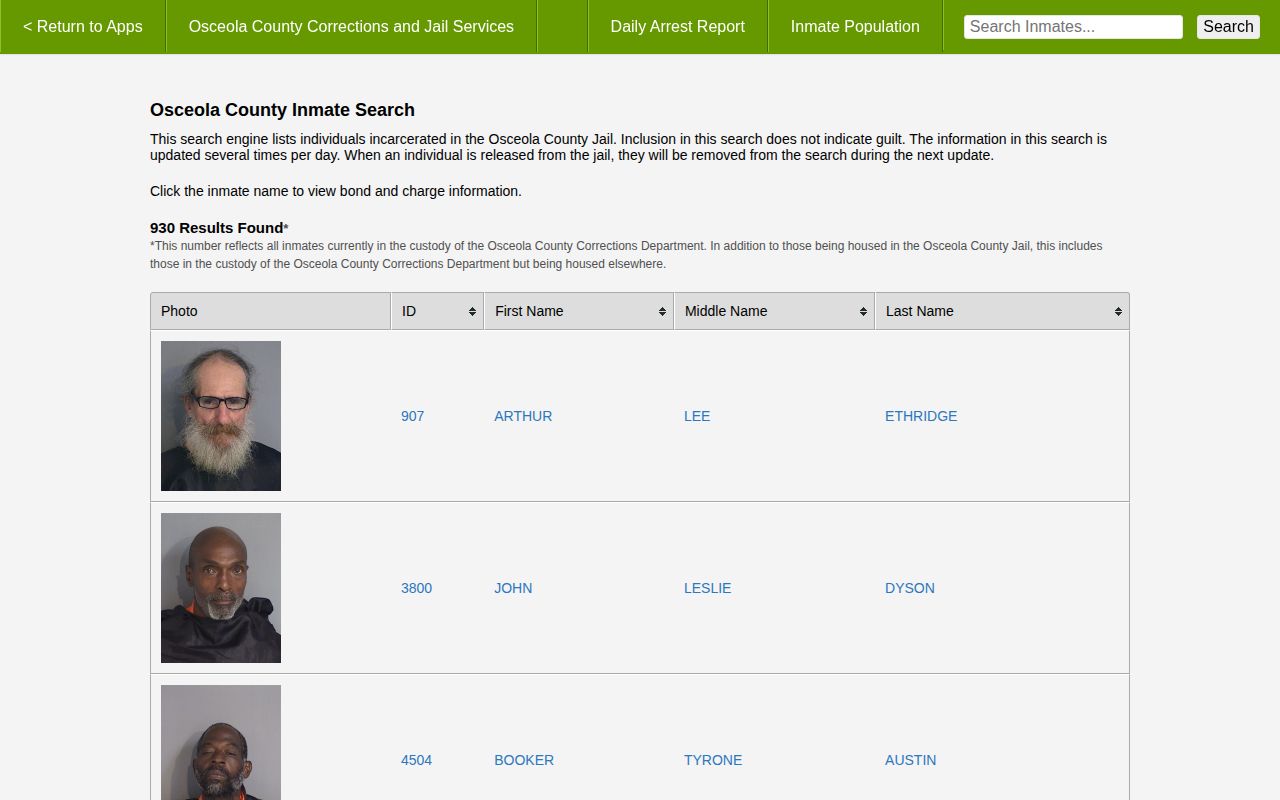
Note: Online disappearance and legal retention are separate, so preserve dates and request the retained daily record.
Osceola Pretrial Release Subset
The Osceola Clerk publishes a weekly Pre-Trial Release Register archive. It is an uncommon durable named source after roster removal, but its scope is narrow. It includes the PTR population, not every bond, cash bail, time-served, transfer, or other release. The register also says it lacks court dispositions. Use it as a supplement to the three Item 22 lists, never as a substitute.
When a PTR entry appears, match its person and case data with the Osceola Clerk court docket. The docket can show the pending case, orders, hearings, disposition, and later supervision events. Corrections remains the source for the actual door-out time. County Community Supervision or PTR records may show that the person left secure custody under local supervision while the case remained open.
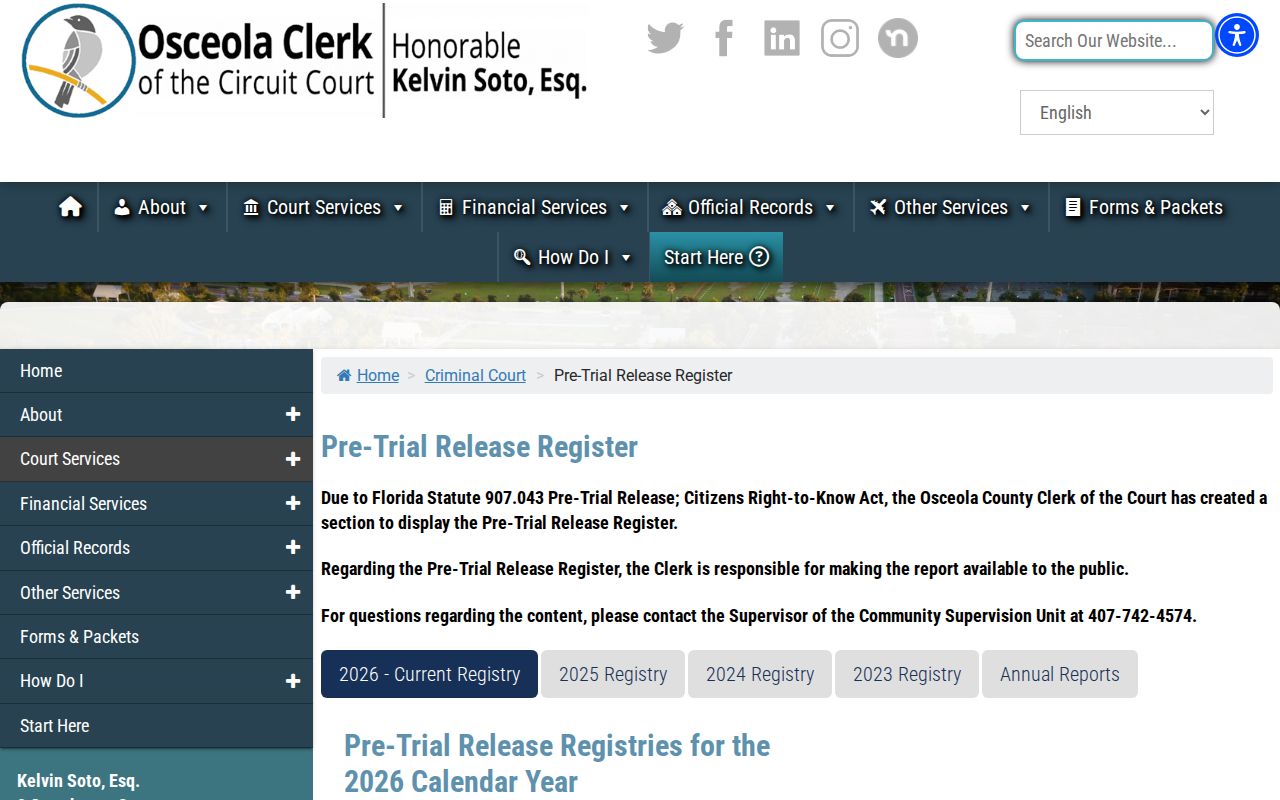
The official PTR archive displays its limited purpose.
Verify Osceola Three-Day Releases
After reviewing the three daily lists, verify any uncertain entry against the correct system. A current Osceola roster match supports county custody at that update. A completed county release sheet establishes the county event. An FDC record applies only to state prison or state supervision, not a person whose custody and probation stayed county-only. BOP and ICE use separate records, and a county transfer to either is not a community release.
Use the booking number, county inmate ID, date of birth, case number, and dates to prevent same-name errors. If a record says other agency, request the destination and continue there. For a named-person search that crosses all of these systems, use the Osceola released inmate record path. That process also pairs the court disposition with the physical-release record without confusing the two.
VINE can add a reported custody event during the three-day span, but it depends on the sending agency's data and may lag. The Clerk docket can explain a bond order, sentence, or later court action, yet the Clerk is not the custodian of the jail's exit time. When the sources differ, preserve the dates shown by each one and ask Corrections for the completed booking/release sheet. That record can resolve whether Osceola released the person to the community or transferred custody elsewhere.